Based on popular demand (thank you Chickie!), this blog should be about
PORK, but I am waiting to write about pork, as I have a new pork recipe I am trying this Sunday.
Veprove is Czech roasted pork and will be the main feature of a big Czech dinner I am making for a very special guest coming from Chicago, originally from the Czech Republic. More on that special dinner to come.
Coincidentally, the same day I asked for special requests for this blog, my friend Dennis (whose mother is the one coming on Sunday for dinner!) presented me with a recipe he has not tried yet, but sounds delicious,
Roasted Pork Rack with Parsnip Puree and Carmelized Carrots and Rosemary. Yum! And, later that
same day, my friend Robb was talking about his favorite pork recipe,
Slow Roasted Pork Tenderloin with Chipotle BBQ Sauce. I have eaten this dish and can attest to its wonderfulness! In the meantime, I have been re-working my own
Pozole, a luscious Mexican stew made with pork shoulder and hominy. We will have lots of pork to talk about in a few weeks!
IRISH CRUBEENS

No one guessed what those creatures were on the front of the last blog post. They are crubeens otherwise known as pigs feet. I first learned about crubeens a few years back while walking the bog road near our house in Spiddal, outside of Galway, IRE. I used to bump into a charming, elderly lady walking with her scruffy dog Bailey, both had a spring in their step, a fast smile, and always had time to stop and talk. And of course we talked about food and old Irish favorites. Nora told me about the old days, when times were very tough, people were desperately poor and food was scarce. Crubeens became a staple. At first I thought Nora was talking about a type of bean, but she explained that they were the feet of pigs. I asked her when the last time was that she ate crubeens...she cocked her head and with a glint in her eye, said, "Oh my dear, I haven't eaten a crubeen in 70 years!" "That good", I replied. Next time I was at Mr. Feeney's, the butcher, I decided to try them. They are still fairly inexpensive (77 cents a pound). Turns out our neighbor, Tim Curran, loves crubeens and his wife refuses to cook them. They do have a bit of a distinctive fragrance (one might say odor) while cooking. If you get a wild hair (or in this case, foot) and want to cook them, here is how:
Dry-scrub the feet liberally with salt and rinse. Pull off any hairs. Place the pigs feet in a large pot. As you can see, I used 3 and they really did fit, I just propped them up for the photo. Add a couple big sprigs of fresh sage; 2 onions peeled and cut in rough pieces, 2 carrots peeled and cut in chunks, 2 stalks celery cut into large slices, about 1/2 cabbage shredded, black pepper corns, lots of course sea salt and cover with water. Bring to a boil and then reduce heat and simmer for about 2-3 hours, depending on the size of your feet, until the meat falls off the bone. I am being a bit facetious as the crubeens never get fork tender, but you should be able to pry the meat from the bone fairly easily. You may have to add more water as they cook down. Serve on a large platter surrounded by the cooked veg. Tim likes to eat crubeens and veg all right off the serving platter, which no one objects to as no one else is eating them. This is a hands-on meal as you pick up the foot and eat it with your hands. I don't really care for crubeens myself, but they are one of Tim's favorites...and the broth does makes an excellent base for pea soup...so all is not lost! Plus I learned how to make an old Irish staple and now get to please Tim every time I do. I miss Nora and her little dog, Bailey and our talks about the old days in Ireland.
An Irish favorite of mine is Lambs Liver. I would see this liver at Mr. Feeney's every time I stopped for meat at his butcher shop in Spiddal, but seemed to always pass it up. There was something about the thought of eating a little lambs liver that gave me the creeps. Then one day, I said what the heck, let's try it.

Here is my husband Jerry in front of an immaculately clean and well stocked meat counter. Mr. Feeney is a warm, friendly and genuine man. He knows his meat and is happy to accommodate requests for special cuts or special orders. He even offered to help me find some fresh pigs blood so I could make my own fresh blood pudding, sometimes referred to as sausage, but that one comes next in the "odd" cateogry. IRE now requires the making of commerical blood pudding from dried blood. This makes for a more coarse and slightly drier sausage.
I have yet to make my own blood pudding, but it is still on my 'Bucket List of Food Things To Do'!
Mr. Feeney cuts his lambs liver thin so it cooks very quickly. First, dredge the pieces of lambs liver in flour, salt and pepper. I don't use any other herb or spice so as not to influence the delicate flavor, although I do like the liver served with mushrooms and onions. Place a large pat of butter (about 1 tbsp.) and a couple Tbsp. of olive oil in a saute pan. Saute 2 thinly sliced small onions until they are translucent, but not browned. Add salt/pepper. Next, add thinly sliced mushrooms (about 1 pound) and cook until they are tender. Remove mushrooms and onions from the pan. Add more butter and olive oil if the pan seems a bit dry (mushrooms absorb a lot of oil). Get the pan smoking hot. The oil will prevent the butter from burning. Place the liver in the hot pan and literally sear for 1 minute on each side. You want the liver to be golden brown (no flour spots), but not cooked until gray as it will keep cooking when you take it out of the pan. Do not let the blood juices scare you. They will get re-absorbed. Toss in the cooked mushrooms and onions and serve immediately. Lambs liver is very tender and has the same flavor as lamb, but is a bit milder. It is delicious!
BLACK PUDDING, ANOTHER OF MY FAVORITES!
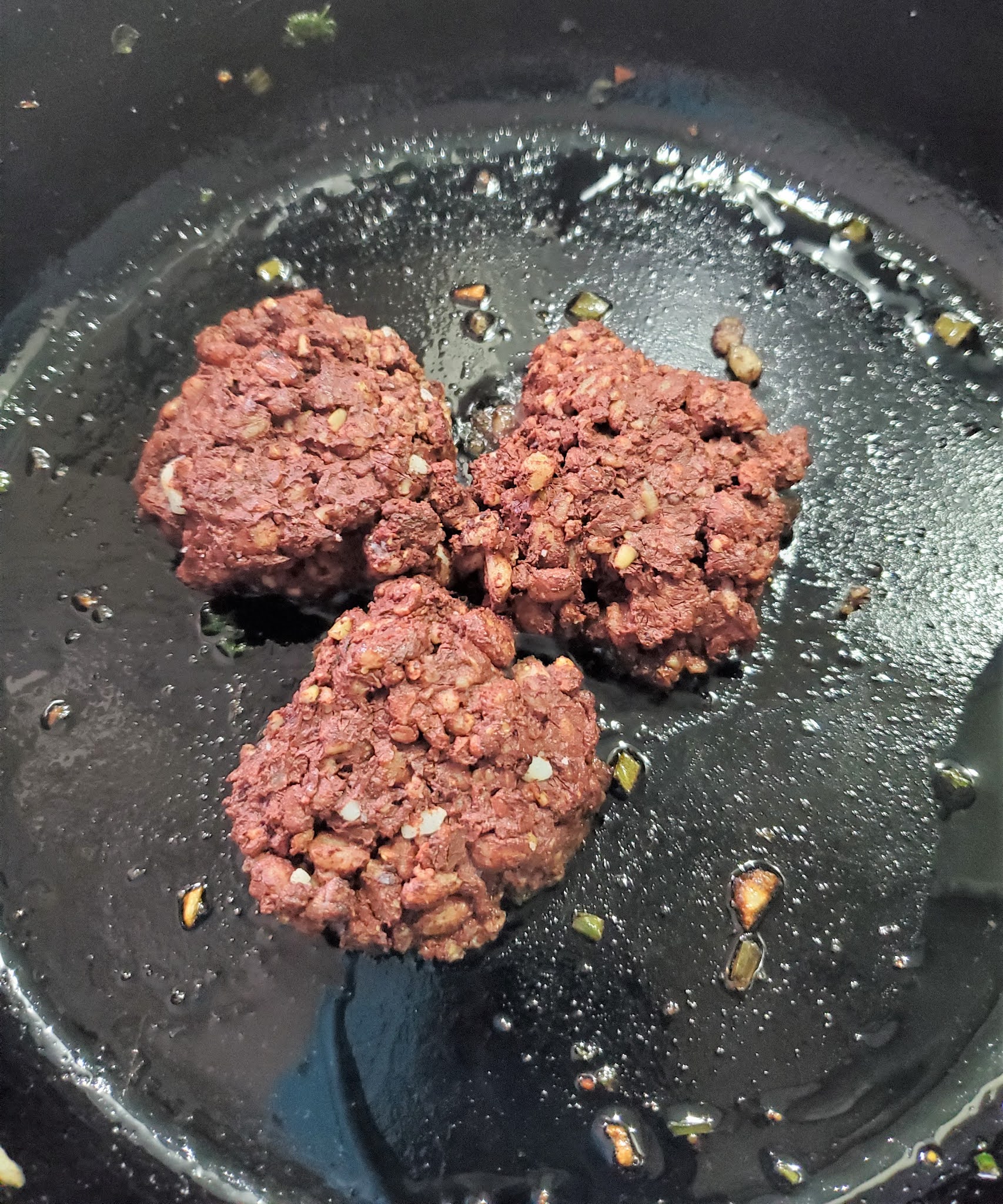
It seems I am stuck in Ireland on "odd" foods. I don't think that these foods are particularly odd, just different from what we might have every day here in America. Every butcher and supermarket in Ireland carries black pudding, sometimes called black sausage, blood pudding, or blood sausage, (pork blood mixed with grains-oats, barley, and herbs and spices and stuffed in a large casing) as do many markets here in the U.S. The love of blood sausage is not unique to Ireland. It is enjoyed nearly all over the world: Portugal, Spain, Caribbean, throughout South America, many African countries, etc., all making their own version of this wonderful sausage. To cook: Cut into thick slices. Remove the casing (easier to do after it is cut). Fry in a pan with butter and oil until very crisp on the outside. The inside stays nice and creamy. Great in the morning with eggs, home fries, and fried tomatoes.
As I said this blog is called Odds and Ends, so here is one more "odd" that I grew up on, and unlike Nora, I love SQUIRREL. As a kid I thought everyone ate squirrel, but now realize just how fortunate I was to enjoy this delicacy as not every kid got to eat it. My Dad hunted and fished so we ate a lot of game growing up. It has been years since I have cooked it and cannot remember all the details, but after my Dad would gut and skin it, my Mother would par boil with onion and apple. Dad would butcher out the saddle (breast and hind quarter) as the rest was too small to bother eating. Dredge the squirrel in buttered bread crumbs and fry in butter and oil until cooked through and nicely browned. Since it has already been par boiled, what you are trying to achieve is a nice brown crust on the squirrel. Squirrel dries out fairly quickly so you do not want to over-cook. That was how we ate it growing up. I like to make it fricasse-style. After browning, make a roux. This is the basic French thickening agent for many classical French sauces and can be used to thicken soups, stews or just made into a lovely sauce by adding fresh herbs to top vegetables. If you add a cup of your favorite cheese, this base makes a perfect cheese sauce.
To make the roux: Get 4 Tbsp. butter bubbling in a frying pan, add 4 Tspb. flour, and cook stirring constantly for about 5 minutes. This step is important. If you don't cook the flour and butter long enough, your sauce ends up tasting like flour. Add 1 cup milk and cook until thickened. Add 1/2 cup cream and cook while stirring constantly about another 3 minutes. Add more milk or cream if it is too thick and this will depend on your purpose for the roux. In the case of the squirrel I don't like it too thick and lighten it with a little white wine and add fresh tarragon. Cook the squirrel in this sauce until it is tender, about 1 hour. Season with salt, pepper, and more fresh tarragon.
Next, let's talk about Ends. I love to work with left overs and my goal is to try to transform whatever we ate the previous day into a completely different meal. Sometimes this is as easy as taking last nights sauted vegetable, mixing with eggs and cheese in the morning and making an omelet. Another delicious omelet idea is to use left-over spaghetti and mix spaghetti into eggs for a fabulous Italian omelet. This omelet is difficult to flip. Cook on one side and then stick under the broiler to cook the top. Cut into thick wedges, frittata-style.
Another left-over idea is to use last nights rice to stuff peppers. Add sauteed onions, mushrooms, garlic or other savory vegetables to the rice and stuff into the peppers. If you have left-over meat (cut-up chicken, sausage, pork or beef) that also can be added to the rice. I like to use red, orange or yellow peppers (partly because they are so colorful and partly because I like them better than green bell peppers). Cut peppers in half. Clean the peppers by removing the seeds and white membrance. Place cut side down on a baking sheet in a small amount of water in a hot (375 degree) over for about 20 minutes so peppers soften. Stuff with your left-over ingredients and bake until hot. Everything is already cooked so this shouldn't take more than 1/2 hour at 350 degrees to re-heat. Last night I added a left-over cut-up grilled chicken breat, and left-over verde sauce (made with tomatillo's...recipe for this sauce coming soon as it is easy to make, versatile and delicious!) and topped with fresh Mexican Queso Blanca (white cheese). The verde sauce moistened the rice and gave a bright flaver to the stuffed peppers. Served with grilled asparagus we had a whole new meal from left-overs.

The black you see in this photo is wild rice (not really rice at all, but a grain). When I make a big pot of brown rice, I use 1/4 cup wild rice to 3/4 cup brown rice. The wild rice changes the flavor and adds a good crunch. Any type of rice can be blended to make your own combo. Adding lentils when you cook brown rice is another way to change it up. Just be aware that not all rice/beans cook at the same speed.
LEFT-OVER GRILLED STEAK APPETIZER
I cook my steak fairly rare (OK, for those who know me, very rare!) so if there are left-overs, the rare steak can stand up to re-heating without getting over-done. Cut the cooked rare steak into thin strips and use as bruchetta. Slice thin round of Italian bread, spray with PAM or cooking spray and just lightly broil. Spread prepared basil pesto on small slices of Italian bread, place a strip of steak to fit, and top with parmesan or provolone cheese. OR, spread the grilled bread with mayonaise, place the steak on to fit and top with blue cheese. Pop under the broiler until the cheese is melted. This makes a nice impromptu appetizer.
MASHED POTATOES REDUX
PANCAKES. Mashed potatoes are versatile when it comes to left-overs. One of the easiest ways to use them is to make a mashed potato pancake. Take your left-over mashed potatoes and mix with 1 egg and enough flour to form a cake-like patty. At this point you can either fry the small cakes in a frying pan with butter and olive oil on both sides until golden brown, OR, you can roll each cake into bread crumbs for a richer cake and fry on both sides until golden, OR you can add any combination of herbs, spices, garlic, scallion, etc. to re-flavor the potato. These savory cakes are good for breakfast (with an egg on top easy-over), lunch (served on top of a salad), or dinner (as a side dish)!
 FISH CAKES
. Do the same as above, but add chopped raw fish (I think cod works the best). The amount depends on how much potato you have, but a good rule are equal parts. 1 cup potato to 1 cup fish equals 4 cakes. Coat each cake with bread crumbs and fry on both sides. Top with a sauce made with 4 Tbsp. mayonaise, 2 Tbsp. sour cream (Fat free Greek-style yogurt is a great substitute), 1/2 tsp. capers, 1/2 tsp. dried dill, black pepper. I also like to garnish with roasted red pepper.
NEXT UP ON COOK WITH CINDY...PORK!